Green Laser Treatment
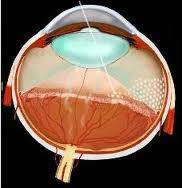
Green laser photocoagulator is a laser-based medical equipment extensively used for the treatment of diabetic retinopathy. Diabetic retinopathy is a disease which causes the growth of excess fragile blood vessels in the retina of the patient suffering from prolonged diabetes. The rupture of these blood vessels causes bleeding and subsequently leads to blindness. The green light from the photocoagulator can reach the retina without much absorption at the intermediate ocular media and gets absorbed at the retina, enabling controlled cutting and blocking of the excess blood vessels leading to simple and less painful treatment of the disease with faster healing than the conventional surgical methods.
It is the most effective and safest laser with the property of maximum absorption by hemoglobin and melanin and least absorption by xanthophylls pigment of macula.
DCR Laser Treatment
Dacryocystorhinostomy (DCR) is a surgical procedure to restore the flow of tears into the nose from the lacrimal sac when the nasolacrimal duct does not function.Endoscopic laser dacryocystorhinostomy (DCR) enables an obstructed lacrimal sac to be opened through an intranasal approach, avoiding the need for a skin incision.
The operation can also be performed endoscopically through the nose where an opening is fashioned in the lacrimal sac from within the nose. Newer techniques and advances in endoscopic surgery has increasingly made this approach the procedure of choice. The advantages include lesser peri-operative morbidity, no scar and a high success rate. Even revision surgery done by the endoscopic route is easier.
With the advent of nasal endoscopes endoscopic dacryocystorhinostomy is becoming popular. In this procedure a nasal endoscope is used to visualise the lacrimal sac through the nasal cavity. The bone covering the lacrimal sac is nibbled out. The medial wall of the sac is excised facilitating drainage of tears into the nasal cavity. This procedure avoids scar.
The endoscopic approach has several advantages, including the following:
- It provides a better aesthetic result with no external scar.
- It allows a one-stage procedure to also correct associated nasal pathology that may be causative.
- It avoids injury to the medial canthus and/or pathologic scar formation.
- It is much less bloody and messy than the external approach.
- The success rate is comparable to the external approach.
Laser Treatment
LASIK or Lasik (laser-assisted in situ keratomileusis) is a type of refractive surgery for correcting myopia, hyperopia, and astigmatism. LASIK is performed by ophthalmologists using a laser. LASIK is similar to other surgical corrective procedures such as photorefractive keratectomy, PRK, (also called ASA, Advanced Surface Ablation) though it provides benefits such as faster patient recovery. Both LASIK and PRK represent advances over radial keratotomy in the surgical treatment of vision problems, and are thus viable alternatives to wearing corrective eyeglasses or contact lenses for many patients.
Lasik is currently the best method of correction of refractive errors. It is accurate, effective and safe.
In LASIK an ultra-thin (90 to 150 micron) flap of cornea is raised and then using a computer guidance Excimer Laser (mostly Argon Fluoride 193 nm) is delivered to reshape the corneal stroma into predetermined curvature. The flap is repositioned back. This leads to correction of myopia, hypermetropia, and astigmatism. The procedure is short and simple and being computer controlled is highly accurate.







 3i Global Inc.