Contact Lens Clinic
Retina Clinic
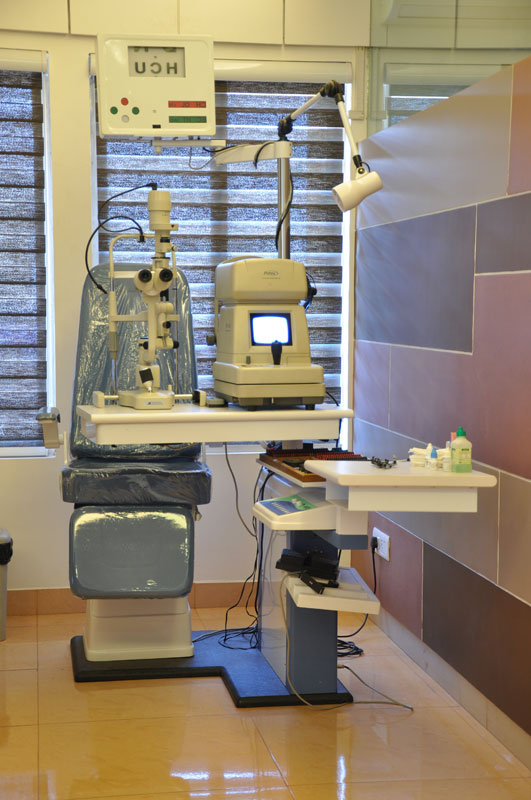
Computerised Eye Testing
Laser Treatment
LASIK or Lasik (laser-assisted in situ keratomileusis) is a type of refractive surgery for correcting myopia, hyperopia, and astigmatism. LASIK is performed by ophthalmologists using a laser. LASIK is similar to other surgical corrective procedures such as photorefractive keratectomy, PRK, (also called ASA, Advanced Surface Ablation) though it provides benefits such as faster patient recovery. Both LASIK and PRK represent advances over radial keratotomy in the surgical treatment of vision problems, and are thus viable alternatives to wearing corrective eyeglasses or contact lenses for many patients.
Lasik is currently the best method of correction of refractive errors. It is accurate, effective and safe.
In LASIK an ultra-thin (90 to 150 micron) flap of cornea is raised and then using a computer guidance Excimer Laser (mostly Argon Fluoride 193 nm) is delivered to reshape the corneal stroma into predetermined curvature. The flap is repositioned back. This leads to correction of myopia, hypermetropia, and astigmatism. The procedure is short and simple and being computer controlled is highly accurate.
Glaucoma & Squint


Phacoemulsification
Phacoemulsification refers to modern cataract surgery in which the eye’s internal lens is emulsified with an ultrasonic handpiece and aspirated from the eye. Aspirated fluids are replaced with irrigation of balanced salt solution, thus maintaining the anterior chamber, as well as cooling the handpiece.
A delicate organ, the eye requires extreme care before, during and after a surgical procedure. An ophthalmologist must diagnose a cataract and conduct or appropriately supervise the conduction of the operation. University programs typically allow patients to specify if they want to be operated upon by the consultant or the resident or fellow.
Preparation and precautions:
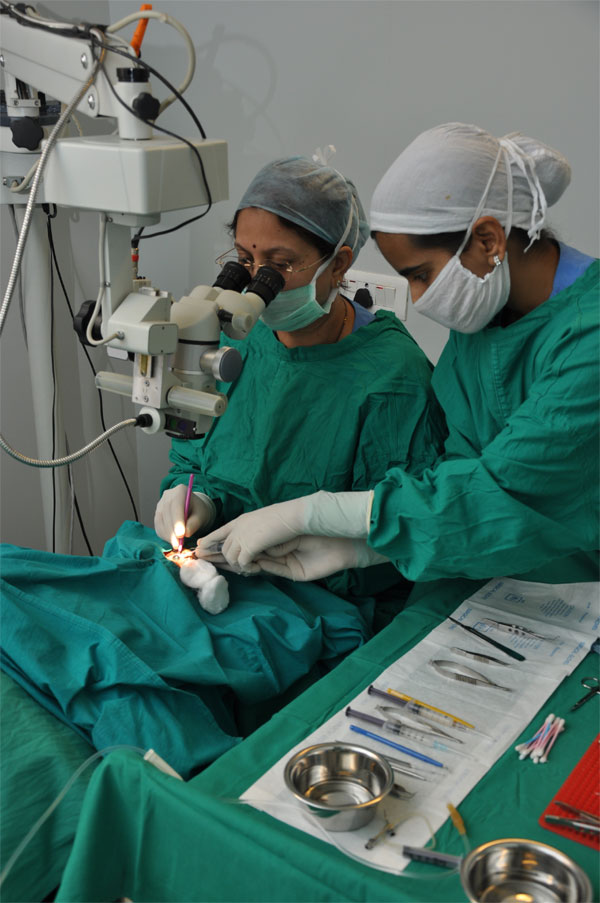 Proper anesthesia is a must for ocular surgery. Topical anesthesia is most commonly employed, typically by the instillation of a local anesthetic such as tetracaine or lidocaine. Alternatively, lidocaine and/or longer-acting bupivacaine anesthestic may be injected into the area surrounding (peribulbar block) or behind (retrobulbar block) the eye muscle cone to more fully immobilize the extraocular muscles and minimize pain sensation. A facial nerve block using lidocaine and bupivacaine may occasionally be performed to reduce lid squeezing. General anesthesia is recommended for children, traumatic eye injuries with cataract, for very apprehensive or uncooperative patients and animals. Cardiovascular monitoring is preferable in local anesthesia and is mandatory in the setting of general anesthesia. Proper sterile precautions are taken to prepare the area for surgery, including use of antiseptics like povidone-iodine. Sterile drapes, gowns and gloves are employed. A plastic sheet with a receptacle helps collect the fluids during phacoemulsification. An eye speculum is inserted to keep the eyelids open.
Surgical technique:
Before the phacoemulsification can be performed, one or more incisions are made in the eye to allow the introduction of surgical instruments. The surgeon then removes the anterior face of the capsule that contains the lens inside the eye. Phacoemulsification surgery involves the use of a machine with microprocessor-controlled fluid dynamics. These can be based on peristaltic or a venturi type of pump.
The phaco probe is an ultrasonic handpiece with a titanium or steel needle. The tip of the needle vibrates at ultrasonic frequency to sculpt and emulsify the cataract while the pump aspirates particles through the tip. In some techniques, a second fine steel instrument called a “chopper” is used from a side port to help with chopping the nucleus into smaller pieces. The cataract is usually broken into two or four pieces and each piece is emulsified and aspirated out with suction. The nucleus emulsification makes it easier to aspirate the particles. After removing all hard central lens nucleus with phacoemulsification, the softer outer lens cortex is removed with suction only.
An irrigation-aspiration probe or a bimanual system is used to aspirate out the remaining peripheral cortical matter, while leaving the posterior capsule intact. As with other cataract extraction procedures, an intraocular lens implant (IOL), is placed into the remaining lens capsule. For implanting a PMMA IOL, the incision has to be enlarged. For implanting a foldable IOL, the incision does not have to be enlarged. The foldable IOL, made of silicone or acrylic of appropriate power is folded either using a holder/folder, or a proprietary insertion device provided along with the IOL.It is then inserted and placed in the posterior chamber in the capsular bag (in-the-bag implantation). Sometimes, a sulcus implantation may be required because of posterior capsular tears or because of zonulodialysis. Because a smaller incision is required, few or no stitches are needed and the patient’s recovery time is usually shorter when using a foldable IOL.
Priyadarshini Eye, Health Care and Research Foundation
Priyadarshini Eye, Health Care and Research Foundation, came to existence in 2004, when a few like-minded people in Belgaum came together with the mission:
“To provide a comprehensive quality ophthalmic, Medical treatment and the latest healthcare amenities free of cost to as many underprivileged people as possible and to train as many doctors as possible for this noble cause”.
A survey done in 2004 revealed cataract incidence of 7% in Khanapur taluk of Belgaum district (more than national figures). Those villages were adopted and with the help of DBCS, a strategy was planned. Every week after screening a particular area, underprivileged blind patients with cataract were selected and brought to our base Hospital in Belgaum for Surgery, after surgery sent back to their respective villages. Till date more than 10,000 patients have been restored their Vision, free of cost with an excellent visual outcome and the Mission continues.
Website: PRIYADARSHINI EYE, HEALTH CARE AND RESEARCH FOUNDATION
Sri Eye Care and Laser Centre
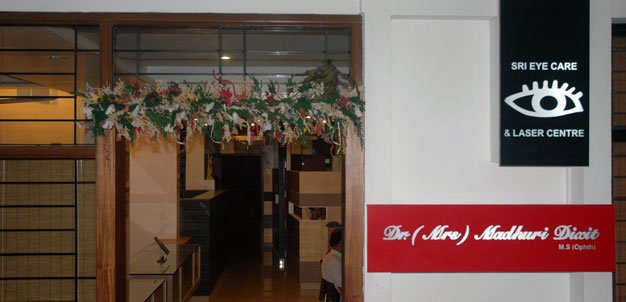
Sri Eye care and laser center had a humble beginning as a small eye care clinic in 2001, situated in the heart of Belgaum city. Over a period of time, now it has beautifully evolved into a State of the art complete eye care and laser center equipped with all modern diagnostic and therapeutic amenities, including excellent surgical setup.
Mission: “Comprehensive, high-quality eye care with compassion by highly efficient and dedicated team of eye professionals, at an affordable cost.”
Excellence in eye care is our commitment.
Belgaum Lasik Center
Belgaum Lasik Laser Center is a private-sector ophthalmic surgery center specializing in the correction of visual problems (nearsightedness, farsightedness, and astigmatism), using a laser procedure called LASIK, which is the safest, most advanced, and most accurate vision correction procedure available today.
Belgaum Lasik Laser Center has the world’s best wavefront optimized laser technology.
Only the finest optics and components used and is ISO 13485:2003 certified.
It has the First US F.D.A approved German Machine.
Please visit following website to know more about Belgaum Lasik center
Website : www.belgaumlasik.com







 3i Global Inc.